What Are the Best Applications for DC Motors?

Time:2026-06-11 Author:Mason
0%

DC motors are at the heart of countless modern applications, driving innovation across various industries. As industry expert John Smith, a leading figure in motor technology, aptly stated, “DC motors are the backbone of automation.” This statement reflects the pivotal role of DC motors in enhancing efficiency and precision in operational settings.

From robotics to electric vehicles, the versatility of DC motors is undeniable. They provide the necessary torque and speed control for dynamic applications, allowing for complex systems to function seamlessly. However, challenges remain. Selecting the right type of DC motor requires a deep understanding of specific needs and mechanical constraints. Knowing when to choose a brushed or brushless motor can significantly impact performance and longevity.

Moreover, the reliability of DC motors is continually tested in demanding environments. The need for regular maintenance and monitoring cannot be overlooked. With the surge in demand for smarter technology, it is crucial to reflect on how these essential components can evolve. Understanding their applications is key, yet many still overlook the intricacies involved. Balancing efficiency with cost-effectiveness remains a recurring dilemma for professionals in the field.
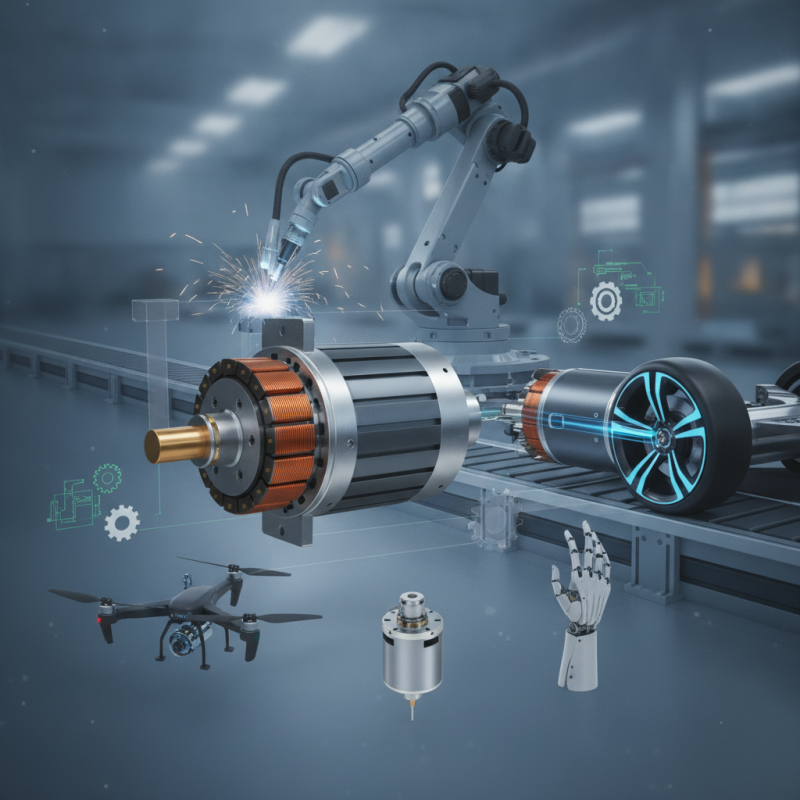
What Are the Best Applications for DC Motors?

Applications of DC Motors in Robotics and Automation

DC motors are pivotal in the fields of robotics and automation. Their reliability and simplicity make them a staple in various applications. According to a recent market report, the robotics sector is expected to grow significantly, with an estimated value of over $100 billion by 2025. DC motors play a crucial role in powering robotics systems, enabling precise movement and control.

In automation, DC motors support conveyors, sorting machines, and packaging equipment. Their ability to provide consistent torque and speed control enhances efficiency in manufacturing processes. A study highlighted that automating systems using DC motors can improve productivity by 25% on average. However, integration complexities can arise. Choosing the right motor requires careful consideration of load, speed, and environment.

While DC motors are versatile, not every application benefits equally. Some may face challenges in scaling or energy efficiency. As industries evolve, continuous evaluation of motor performance is essential. Embracing innovation while acknowledging limitations will drive success in using DC motors in robotics and automation.

Applications of DC Motors in Robotics and Automation

Using DC Motors in Electric Vehicles for Enhanced Performance

DC motors play a pivotal role in advancing electric vehicle (EV) technology. They provide high efficiency and excellent torque, essential for optimal vehicle performance. According to a report by the International Energy Agency in 2022, electric vehicles are projected to reach 145 million units by 2030. This shift highlights the increasing reliance on DC motors to meet consumer demands for speed and reliability.

These motors primarily operate on a simple principle of converting electrical energy into mechanical energy. A recent study from the US Department of Energy indicated that electric motors account for about 60% of the total electric vehicle powertrain. By narrowing down on power efficiency, manufacturers can enhance vehicle range while reducing energy consumption. This leaves room for improvement, as not all manufacturers effectively optimize their DC motor designs for weight and energy use.

Yet, challenges exist. The optimal balance between performance and battery management remains complex. Engineers are constantly iterating designs to improve energy recovery systems during braking. As electric vehicle technology matures, better integration of DC motors with battery systems becomes crucial. Continuous refinement and rigorous testing can help identify best practices and common pitfalls. Addressing these issues will be vital for the future of electric vehicles.

DC Motors in Home Appliances: Efficiency and Versatility

DC motors are indispensable in home appliances, showcasing both efficiency and versatility. These motors can transform electrical energy into mechanical energy with remarkable ease. According to a market analysis report by Allied Market Research, the global DC motor market is projected to reach $29.99 billion by 2026, illustrating their growing importance in everyday devices.

In homes, DC motors power various appliances, from vacuum cleaners to kitchen mixers. Their ability to provide precise speed control enhances user experience. For instance, small appliances like hairdryers benefit from variable speed settings. Notably, a study from ResearchAndMarkets highlights that the preference for energy-efficient solutions is driving DC motor adoption. This means consumers are keen on reducing their energy footprint, aligning with global sustainability goals.

Tip: When selecting an appliance with a DC motor, check for energy efficiency ratings. Consider how you use the appliance daily. Understanding your needs can lead to better performance and savings. Another consideration is the maintenance of these motors. Regular checks can ensure longevity and optimal operation. Reflecting on these aspects will help improve your overall appliance experience.

Industrial Applications of DC Motors for Machinery and Equipment

DC motors play a crucial role in various industrial applications, particularly in machinery and equipment design. Their reliability and flexibility make them ideal for tasks that require precise speed and torque control. Many manufacturing facilities use these motors in conveyor systems, where they help transport materials smoothly along a production line. The ability to adjust speed quickly enhances productivity and efficiency.

In robotic applications, DC motors are indispensable. These motors allow robots to perform tasks with accurate movements. They enable precise control in assembly lines, where robots need to handle delicate components. Additionally, DC motors enhance the performance of tools and machinery, providing consistent power for operations.

Despite their advantages, there are challenges with DC motors. They can experience wear and tear over time, necessitating regular maintenance. The brushes in brushed DC motors, for instance, may require replacement. Understanding these limitations is vital for making informed decisions in machinery applications. It's essential to weigh the benefits against potential drawbacks when integrating DC motors into industrial settings.

What Are the Best Applications for DC Motors? - Industrial Applications of DC Motors for Machinery and Equipment

Application Industry Typical Use Case Motor Type Voltage Range
Conveyor Systems Manufacturing Material handling and transport Brushed DC Motor 12V - 48V
Robotic Arms Automation Precision movement and control Brushless DC Motor 24V - 60V
Electric Vehicles Transportation Propulsion systems Brushed/Brushless DC Motors 36V - 400V
Pump Systems Water Treatment Fluid movement and distribution Brushed DC Motor 12V - 24V
Power Tools Construction Drilling, cutting, and fastening Brushed DC Motor 7.2V - 18V

Role of DC Motors in Aerospace and Aviation Technology

DC motors play a significant role in aerospace and aviation technology, where precision and reliability are crucial. These motors drive various systems in aircraft, from rudder controls to landing gear mechanisms. Their ability to operate smoothly at varying speeds makes them ideal for these applications. Engineers rely on DC motors for their efficient performance in critical environments.

Tip: Always consider the weight of components. Heavier parts can affect flight performance. Lightweight designs are crucial in aviation.

In addition to propulsion, DC motors are vital in auxiliary systems. They power flaps, slats, and other movable surfaces, enhancing flight safety. The demand for accurate control means that DC motors must function flawlessly. Even small failures could lead to significant issues.

Tip: Routine maintenance is essential. Regular checks can prevent unexpected failures in systems powered by DC motors.

Aerospace engineers must understand the operational limits of DC motors. While they are reliable, they can be affected by extreme temperatures and vibrations. Adapting these motors for varying conditions is an ongoing challenge.

Tip: Testing is key. Rigorous evaluation helps ensure that motors meet performance standards in unpredictable environments.

FAQS

: What is the role of DC motors in robotics?

: DC motors provide precision and control in robotics systems. They enable consistent movement.

How do DC motors enhance automation processes?

They support machines like conveyors and packaging equipment. This can improve productivity by 25%.

What challenges arise when integrating DC motors in systems?

Integration can be complex, requiring attention to load, speed, and environmental factors.

How do DC motors contribute to electric vehicle performance?

They offer high efficiency and torque, impacting the overall vehicle performance significantly.

What percentage of electric vehicle powertrain is attributed to electric motors?

About 60% of the total electric vehicle powertrain comes from electric motors.

What should be considered when choosing appliances with DC motors?

Look for energy efficiency ratings and reflect on daily usage for better performance.

What current trend is influencing the adoption of DC motors in home appliances?

The preference for energy-efficient solutions is driving their increased adoption for sustainability.

How can consumers enhance their appliance experiences with DC motors?

Regular maintenance checks can ensure longevity and optimal operation for home appliances.

What is a common pitfall in electric vehicle technologies regarding DC motors?

Not all manufacturers optimize designs well for weight and energy efficiency.

What is essential for the future integration of DC motors in electric vehicles?

Better integration with battery systems and ongoing design refinements are crucial for enhancements.

Conclusion

DC motors play a crucial role in various applications across multiple industries, showcasing their efficiency and versatility. In robotics and automation, DC motors provide precise control and responsiveness, making them ideal for dynamic tasks. The electric vehicle sector benefits from DC motors as they enhance performance, offering improved acceleration and energy efficiency.

Moreover, home appliances utilize DC motors for their compact design and ability to deliver consistent performance, contributing to the overall efficiency of devices like vacuum cleaners and fans. In industrial applications, DC motors are essential for operating machinery and equipment, ensuring smooth and reliable functionality. Additionally, the aerospace and aviation fields leverage DC motors for their reliability and lightweight characteristics, vital for various technological innovations. Overall, the versatility of DC motors makes them indispensable in both everyday applications and advanced technological developments.

Mason

Mason

Mason is a seasoned marketing professional with a deep expertise in the company's offerings and a passion for driving brand awareness. With a strong background in digital marketing strategies, he has an innate ability to connect with diverse audiences and effectively communicate product benefits.......