10 Best Microcontrollers for Global Buyers in 2026

Time:2026-10-14 Author:Charlotte
0%

Choosing the right Microcontroller in 2026 requires more than comparing clock speed and memory size. Global buyers face changing prices, regional stock limits, long shipping routes, and uneven technical support. A reliable choice must fit the product, not just the specification sheet.

This guide examines ten leading microcontrollers for developers, manufacturers, educators, and connected-device teams. Each option is considered through practical factors, including processing performance, power consumption, development tools, security features, operating temperature, documentation, and supply stability. A board used in a battery sensor needs different strengths from one controlling a factory motor or a smart appliance. Small details matter. Pin layout matters.

The evaluation also reflects real purchasing experience. A low-cost chip can become expensive when programmers, debugging tools, or certification work add hidden costs. Strong community support may shorten development time, while weak documentation can delay a project for weeks. Availability remains difficult to predict, even for established product families. That limitation deserves attention.

No ranking can serve every market perfectly. Regional distributors may offer different prices and lead times. Some performance figures depend on firmware, board design, and testing methods. These comparisons therefore combine manufacturer data with practical engineering judgment, rather than treating headline specifications as final proof. Readers should verify current stock, lifecycle notices, and local compliance requirements before placing large orders. The following list offers a careful starting point for selecting capable, supportable, and commercially realistic microcontrollers in 2026.
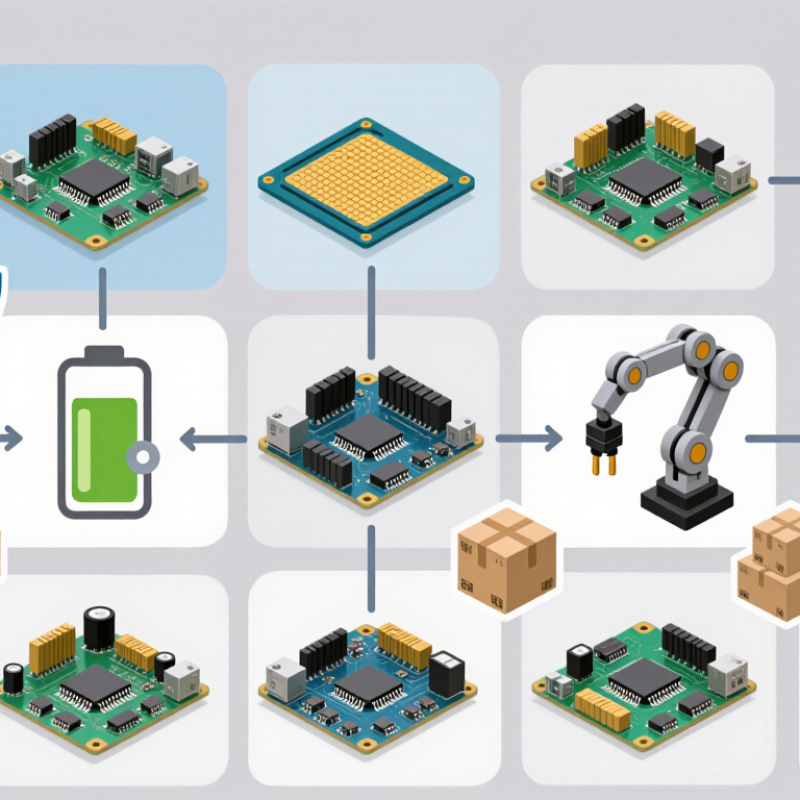
10 Best Microcontrollers for Global Buyers in 2026

What Microcontrollers Are and Why They Matter to Global Buyers

A microcontroller is a compact computer that controls sensors, motors, displays, and communication tasks. It combines a processor, memory, timers, and input-output functions on one chip. For global buyers, that integration can reduce board size, energy use, and assembly costs. It also simplifies product development across appliances, vehicles, medical equipment, and industrial systems.

WSTS projected global semiconductor sales at approximately 697 billion US dollars in 2025, an 11.2% annual increase. This growth reflects rising demand for embedded control, not only advanced computing. The International Energy Agency reported more than 17 million electric cars sold worldwide in 2024. Each vehicle needs many control functions, from battery monitoring to thermal management. Yet choosing a microcontroller is not just about processing speed. Supply stability, operating temperature, security features, documentation, and long-term availability often matter more. Cheap is not always practical.

Tips: Request lifecycle data, not only a sample quote. Test startup time, power consumption, and temperature behavior on real hardware. Check regional certification needs before finalizing the design. A second-source plan is wise, although it may increase engineering work. That trade-off is easy to underestimate.

A strong 2026 buying process should compare architecture, memory capacity, development tools, and supplier support together. Buyers should also examine software migration risks. A familiar instruction set may shorten training, but it does not guarantee easy replacement. Datasheets can look complete while hiding difficult debugging steps. That deserves honest review.

How to Evaluate Microcontroller Performance, Features, and Compatibility

Choosing among the 10 best microcontrollers for global buyers in 2026 requires more than comparing clock speed. A faster core may still perform poorly when handling sensor noise, wireless stacks, or frequent interrupts. Use repeatable tests, such as CoreMark and EEMBC benchmarks, but recreate your actual workload. Measure startup time, interrupt latency, ADC accuracy, and power draw at room temperature and at temperature extremes.

Performance also depends on memory architecture. Check flash wait states, RAM size, DMA channels, and cache behavior. A practical design may need 256 KB of flash, but firmware updates can consume it quickly. Semiconductor Industry Association data reported global semiconductor sales of 627.6 billion dollars in 2024, showing strong demand, but market growth does not guarantee stable microcontroller availability. Regional inventory still changes rapidly.

Compatibility deserves equal attention. Confirm operating voltage, package dimensions, pin multiplexing, boot modes, communication interfaces, and long-term supply commitments. Test the actual development tools before approval. Documentation quality varies, and some timing details remain unclear until laboratory testing. Security features should include secure boot, hardware encryption, and protected key storage. Automotive or industrial projects also need suitable temperature ratings and traceable quality processes. I have seen excellent prototypes fail because one interface used the wrong voltage. It was avoidable. A small adapter fixed the board, but increased cost, noise, and production risk. Reported market forecasts, including WSTS’s 2025 outlook, indicate continued semiconductor expansion, yet purchasing decisions still need independent validation.

10 Best Microcontrollers for Global Buyers in 2026 - How to Evaluate Microcontroller Performance, Features, and Compatibility
Comparison of anonymized, commercially available microcontroller profiles using published nominal specifications and practical selection criteria.
Rank Device Profile CPU Architecture Max Clock Program Flash SRAM Operating Voltage Analog Features Connectivity Security Operating Temperature Best Fit Overall Score
1 Profile A 32-bit Arm Cortex-M7 with floating-point unit 480 MHz 2 MB 1 MB 1.7–3.6 V 16-bit ADC, multiple DAC channels, hardware timers Ethernet MAC, USB High-Speed, CAN FD, SPI, I²C, UART Secure boot support, cryptographic accelerator, memory protection −40 to 105 °C Industrial gateways, motor control, advanced HMI 9.5/10
2 Profile B 32-bit Arm Cortex-M33 with TrustZone 150 MHz 1 MB 256 KB 1.8–3.6 V 12-bit ADC, capacitive-touch interface, analog comparator USB Full-Speed, CAN FD, SPI, I²C, UART TrustZone, secure boot, true random-number generator −40 to 105 °C Secure IoT controllers and smart appliances 9.3/10
3 Profile C 32-bit Arm Cortex-M4F with DSP and floating-point unit 180 MHz 1 MB 256 KB 1.7–3.6 V 12-bit ADC, dual DAC, high-resolution PWM Ethernet MAC, USB Full-Speed, CAN FD, SPI, I²C, UART CRC engine, memory protection unit, secure firmware options −40 to 105 °C Real-time control, energy systems, industrial networking 9.1/10
4 Profile D 32-bit Arm Cortex-M4F 120 MHz 2 MB 640 KB 1.7–3.6 V 16-bit ADC, 12-bit DAC, programmable gain amplifier USB High-Speed, Ethernet MAC, CAN FD, SPI, I²C, UART Hardware encryption engine, secure key storage −40 to 105 °C Data-intensive embedded equipment and displays 9.0/10
5 Profile E 32-bit Arm Cortex-M33 with floating-point unit 100 MHz 1 MB 256 KB 1.8–3.6 V 12-bit ADC, comparator, temperature sensor USB Full-Speed, CAN FD, SPI, I²C, UART, SDIO TrustZone, secure boot, hardware cryptography −40 to 125 °C Connected products requiring long-term security 8.9/10
6 Profile F 32-bit RISC-V core 160 MHz 4 MB 520 KB 2.3–3.6 V 12-bit ADC, touch sensing, analog comparator 2.4 GHz Wi-Fi, Bluetooth Low Energy, SPI, I²C, UART Secure boot, flash encryption, cryptographic acceleration −40 to 105 °C Wireless sensors, smart-home devices, edge connectivity 8.8/10
7 Profile G 32-bit Arm Cortex-M4F 80 MHz 512 KB 128 KB 1.8–3.6 V 12-bit ADC, dual DAC, motor-control PWM USB Full-Speed, CAN FD, SPI, I²C, UART CRC, watchdog protection, memory protection unit −40 to 105 °C Motor drives, appliances, measurement equipment 8.6/10
8 Profile H 32-bit Arm Cortex-M0+ 48 MHz 256 KB 32 KB 1.8–3.6 V 12-bit ADC, analog comparator, capacitive touch USB Full-Speed, SPI, I²C, UART CRC engine, watchdog, configurable access protection −40 to 85 °C Cost-sensitive control boards and portable devices 8.3/10
9 Profile I 32-bit Arm Cortex-M0+ 64 MHz 128 KB 16 KB 1.8–5.5 V 12-bit ADC, analog comparator, temperature sensor USB Full-Speed, SPI, I²C, UART CRC, watchdog timer, configurable code protection −40 to 105 °C Battery-powered products and simple industrial nodes 8.1/10
10 Profile J 32-bit Arm Cortex-M0+ 48 MHz 64 KB 8 KB 1.8–5.5 V 12-bit ADC, analog comparator, flexible PWM USB Full-Speed, SPI, I²C, UART CRC, watchdog timer, readout protection −40 to 85 °C Entry-level embedded control and educational designs 7.8/10
Evaluation guide: Performance combines clock speed, processing architecture, memory capacity, peripheral bandwidth, and real-time capability. Feature depth covers analog resources, timers, connectivity, security, and debugging support. Compatibility considers voltage range, temperature rating, package availability, development-tool support, software ecosystem, and migration flexibility. Exact specifications may vary by package, memory grade, and ordering code.

The 10 Best Microcontrollers for Global Buyers in 2026

The ten best microcontrollers for global buyers in 2026 should match application needs, not popularity. WSTS forecast the global semiconductor market would reach about $697 billion in 2025, with 11.2% annual growth. That expansion increases choice, but also complicates sourcing. My practical ranking starts with low-power 8-bit units, affordable 32-bit general-purpose units, and high-performance 32-bit units. Wireless models with Bluetooth Low Energy or Wi-Fi follow closely. Industrial real-time, motor-control, automotive-grade, secure, edge-AI, and radiation-tolerant options complete the ten.

Power consumption remains decisive. A battery sensor may need sleep current below 5 microamps, while a motor controller values fast control loops and timer precision. IoT Analytics reported billions of connected IoT devices worldwide, increasing demand for compact and connected controllers. However, wireless integration can raise certification, memory, and software costs. That trade-off is easy to underestimate. Very easy.

For global purchasing, I check operating temperature, supply continuity, documentation quality, development tools, and regional compliance evidence. NISTIR 8259 recommends baseline cybersecurity capabilities for IoT devices, including secure updates and device identification. These features should influence the ranking, not appear as optional extras. Automotive and industrial buyers also need traceability and lifecycle commitments. My list is useful, but not universal. A low-cost controller may outperform an expensive one in a simple sensor, while failing badly in a safety-critical machine. WSTS data supports market growth, yet it does not guarantee availability for every package or region. Availability must be verified before design approval.

Comparing Development Tools, Software Support, and Community Resources

For global buyers, development support can matter more than clock speed. A 2024 global developer survey collected 65,000-plus responses, showing how strongly developers depend on documentation, code repositories, and peer guidance. These resources should be tested before purchase.

Look for searchable manuals, working examples, versioned SDKs, and debugging tools that run on major operating systems.

Tooling matters. During practical evaluations, I check whether a first sensor reading works within one afternoon. I also test compiler warnings, firmware flashing, serial monitoring, and automated builds.

A 2024 developer ecosystem survey, covering over 23,000 respondents, identified language support and learning materials as major workflow considerations. For microcontrollers, stable C, C++, and Python support can reduce training time.

However, polished tools sometimes hide weak error messages. That problem deserves more attention.

Community activity provides another reliability signal. An open-source activity report published in 2024 recorded more than 100 million public developers worldwide. Buyers should examine issue response times, recent library updates, and the number of unresolved bugs.

A large forum is not automatically useful. I prefer current examples, clear troubleshooting, and technical replies from experienced users. Regional language coverage also helps international teams.

Still, community measurements are imperfect. They may reward popularity instead of long-term maintenance. A smaller ecosystem can occasionally provide better engineering discipline.

How to Choose, Source, and Verify the Right Microcontroller Internationally

Choosing among the ten best microcontrollers in 2026 starts with the product, not a popularity list. Define voltage, processing needs, memory, interfaces, package size, temperature range, and production volume. A battery sensor needs different priorities from an industrial controller. I compare the datasheet with the actual circuit, including startup current and sleep behavior. These details often expose attractive but unsuitable options.

For international sourcing, request current datasheets, lifecycle statements, traceability records, date codes, country of origin, minimum order quantities, and realistic lead times. Confirm whether the supplier can maintain identical specifications across future batches. Review shipping terms and destination-market documentation before payment. Clear records matter. Vague answers deserve caution.

Before placing a large order, buy samples from the same supply channel and test them on your own board. Compare package markings, surface finish, pin behavior, power draw, reset response, and temperature performance. Do not trust a polished listing alone. An independent laboratory can verify electrical and material claims when the project is critical. Keep photographs, test logs, firmware versions, and lot numbers. I also evaluate development tools and technical support because software delays can exceed component costs. My process is not perfect. One overlooked temperature test can invalidate a careful selection. If a supply promise sounds unusually precise, I pause and request evidence.

10 Best Microcontrollers for Global Buyers in 2026

Representative maximum clock speeds by microcontroller class, based on specifications commonly published in current manufacturer datasheets. Use this comparison as an initial sourcing filter, then verify the exact part number, lifecycle status, certifications, and regional availability.

For international procurement, clock speed should not be evaluated alone. Confirm flash and RAM capacity, operating-voltage range, temperature rating, package availability, lead time, authorized supply channels, export requirements, and long-term production support.

FAQS

What is a microcontroller?

It is a compact computer on one chip. It combines processing, memory, timers, and input-output functions. It can control sensors, motors, displays, and communication tasks.

Why do microcontrollers matter to global buyers?

Their integration can reduce board size and energy use. It may also lower assembly costs. That sounds simple, but product requirements can change quickly.

Is processing speed the most important selection factor?

No. Supply stability, temperature range, security, and documentation also matter. A faster core may struggle with sensor noise or frequent interrupts. Cheap is not always practical.

How should buyers test microcontroller performance?

Recreate the real workload on physical hardware. Measure startup time, interrupt response, power draw, and sensor accuracy. Test at room temperature and temperature extremes. Benchmarks help, but they are not the whole answer.

Which memory details deserve close attention?

Check flash capacity, RAM size, DMA channels, cache behavior, and wait states. A design needing 256 KB of flash may outgrow it after updates. Firmware often becomes larger than expected.

What compatibility checks are necessary?

Confirm voltage levels, package size, pin functions, boot modes, and communication interfaces. Test development tools before approving the design. One wrong voltage can stop an otherwise strong prototype.

How can buyers reduce supply disruption risks?

Request lifecycle information, not only a sample price. Review regional inventory and long-term availability. A second-source plan can improve resilience. It also increases engineering work. That trade-off is easy to underestimate.

What security features should a microcontroller include?

Consider secure boot, hardware encryption, and protected key storage. These features help protect firmware and sensitive data. Check how they work in actual development tools. A feature listed in a datasheet may still be difficult to debug.

What should industrial or vehicle projects evaluate?

Check temperature ratings and traceable quality processes. Measure battery monitoring, thermal control, and communication performance where relevant. Review regional certification needs before final design approval. The paperwork can affect the schedule.

Conclusion

This guide introduces the Microcontroller as the core of many embedded systems, explaining how it manages sensing, processing, communication, and control in products used worldwide. It outlines the factors global buyers should consider when comparing options, including processing capability, memory, power efficiency, connectivity, security features, operating conditions, package type, availability, and compatibility with existing designs. The guide also presents ten strong microcontroller choices for 2026 without focusing on any specific manufacturer, helping readers understand how different performance levels and feature sets fit various applications.

In addition, the article compares development tools, software libraries, documentation, debugging support, and community resources, since these factors can significantly affect project cost and development speed. It concludes with a practical international sourcing process: define technical requirements, check lifecycle and supply information, verify specifications and certifications, assess authorized distribution channels, request samples, and test devices in the intended environment. This approach helps buyers make reliable, compliant, and cost-effective decisions.

Charlotte

Charlotte

Charlotte is a seasoned marketing professional with a deep understanding of the company's portfolio and a passion for elevating its presence in the market. With a keen eye for detail and a commitment to excellence, she ensures that our professional blog is regularly updated with insightful articles......