Tips for Choosing Brushless Technology in Your Products?

Time:2026-06-11 Author:Liam
0%

Choosing the right technology for your products can be challenging. Brushless Technology stands out as a reliable option. This technology offers several advantages, such as improved efficiency and longer lifespan. Manufacturers favor it for its performance in various applications.

However, selecting Brushless Technology requires careful consideration. The market is flooded with options, and not all products are created equal. Some may promise high efficiency but fall short on durability. Researching manufacturers and their track records is crucial. Look for trusted brands with expertise in Brushless Technology.

It is also essential to evaluate your specific needs. Different applications demand varying performance levels. Not every product equipped with Brushless Technology will meet your requirements. Ask for samples or trials to test their capabilities. Make informed decisions based on this hands-on experience. This approach enhances your confidence in the technology and ensures satisfactory results.
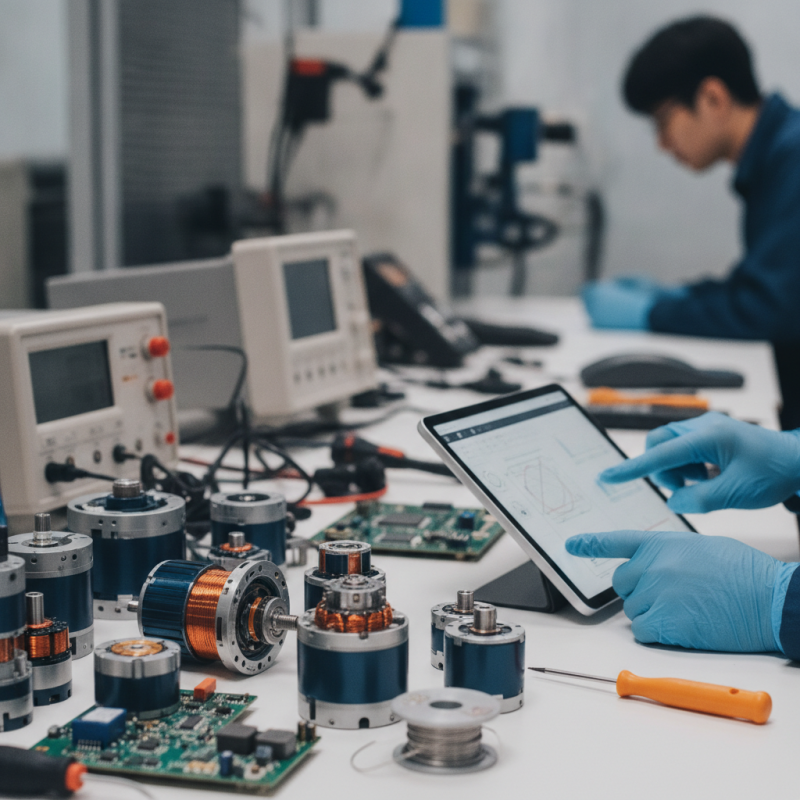
Tips for Choosing Brushless Technology in Your Products?

Understanding Brushless Technology and Its Advantages

Brushless technology has transformed various industries by enhancing efficiency and reducing maintenance costs. Unlike traditional brushed motors, brushless motors operate without friction, leading to a significant increase in longevity. Data from the International Journal of Electronics shows that brushless motors can have efficiency rates exceeding 85%. This efficiency translates into lower energy consumption for applications in robotics, automotive, and consumer electronics.


When integrating brushless technology, it's crucial to consider the specific application requirements. Not all brushless motors offer the same characteristics. Understanding torque, speed, and thermal performance can aid in making the right choice. For instance, whether the device demands high torque at low speeds or sustained performance at higher speeds impacts the selection process.


One important tip is to conduct thorough testing before full-scale implementation. Prototypes can reveal performance issues related to part compatibility and electrical configurations. Additionally, examine the costs associated with integration. While brushless technology often presents a higher initial investment, the long-term savings in maintenance and operation can outweigh these initial costs. Make sure to analyze the trade-offs carefully to avoid costly missteps.

Key Factors to Consider When Choosing Brushless Motors

When selecting a brushless motor for your product, understanding the key factors is crucial. Start with the motor's size and power requirements. Consider the space available in your design. A larger motor might offer more torque but could be impractical. Be realistic about the design constraints and the intended application. Gauge performance features against the needs of the system. Will speed or efficiency be more critical?

Look at the controller compatibility. Brushless motors often need specific controllers. Check if your existing systems can integrate. This step can prevent potential frustrations later on. Also, examine the cooling requirements. Brushless motors generate heat, requiring a good heat dissipation strategy. Failing to address this can lead to performance issues.

Here are some tips to help in your decision-making process. Research different motor types and their specifications. Understand your application fully. Don’t overlook long-term costs versus upfront costs. Brushless technology can have a higher initial price but offers efficiency over time. Always consult with experts, as their input can help guide your choices effectively. A well-informed decision now can save time and resources later.

Applications and Industries Benefiting from Brushless Technology

Brushless technology is gaining momentum across various industries. Its advantages are evident in applications ranging from electric vehicles (EVs) to consumer electronics. According to a report by Grand View Research, the global brushless DC motor market was valued at $4.2 billion in 2022 and is projected to grow at a CAGR of 12.5% from 2023 to 2030. This growth reflects the increasing demand for energy-efficient and low-maintenance solutions.

In the automotive sector, brushless motors are crucial for electric vehicles. They enhance efficiency, leading to extended battery life. Reports indicate that EVs incorporating brushless technology can improve range by up to 20%. This technology also plays a pivotal role in robotics and automation, where precision and reliability are vital. According to a study by MarketsandMarkets, the robotics industry is expected to grow from $45 billion in 2020 to over $146 billion by 2026, fueled by innovations like brushless motors.

Moreover, brushless technology finds applications in HVAC systems. These systems benefit from quieter operation and higher efficiency. However, it's important to consider the initial cost. Although long-term savings are evident, the upfront investment can be significant. Evaluating the overall lifecycle cost is essential for informed decision-making. Balancing efficiency with cost is a challenge many companies face when adopting this technology.

Tips for Choosing Brushless Technology in Your Products

Application Area Industry Advantages
Electric Vehicles Transportation Higher efficiency, longer lifespan
Robotics Manufacturing Precision control, reduced maintenance
Drones Aerospace Lightweight, increased flight time
Home Appliances Consumer Electronics Quieter operation, energy efficiency
Medical Devices Healthcare Reliability, high precision

Cost vs. Performance: Evaluating Your Product Needs

When evaluating cost versus performance for brushless technology, it's essential to consider your specific product needs. Brushless motors provide higher efficiency and longer lifespans than their brushed counterparts. The energy loss in brushed motors can be as high as 20% due to friction and heat. In contrast, brushless motors can improve energy efficiency by up to 30%. This efficiency can translate into cost savings over time.

However, upfront costs for brushless technology can be higher. Reports suggest that integrating brushless motors may increase production costs by 15-30%. This is a significant consideration for product pricing and market competitiveness. Understanding the projected lifespan and operational costs of brushless systems can offset initial investments.

Consumer preferences also play a role. A survey indicated that 70% of users prefer products with lower maintenance needs, which brushless motors offer. This preference may drive demand and justify the initial cost increase. It's essential to align performance expectations with budget constraints. Balancing these factors is crucial to choosing the right technology for your product.

Performance Comparison of Brushless vs. Brushed Motors

Future Trends in Brushless Technology and Innovation

The future of brushless technology is filled with exciting trends and innovations. Companies are investing heavily in research and development. The focus is on improving efficiency and performance. For instance, advancements in materials are enhancing durability. Manufacturers are using lighter, high-strength composites. These materials help in reducing energy consumption.

Connectivity is another emerging trend. Incorporating IoT capabilities is becoming common. Devices can now communicate and share data. This opens up new possibilities for real-time monitoring and control. Users can analyze performance and adapt usage accordingly. However, integrating these features can be complex. It requires careful planning and execution.

Sustainability is also a growing concern. Brushless technology typically produces less waste. Yet, manufacturers must strive to make their processes greener. This might involve revisiting supply chains and production methods. Challenges lie in balancing performance with environmental impact. Each step toward innovation must consider both benefits and drawbacks, leading to a more responsible approach in the long term.

FAQS

: What should I consider when choosing a brushless motor?

: Start with motor size and power needs. Assess your design space carefully.

Are larger motors better for performance?

Larger motors offer more torque. However, they might not fit your design constraints.

How important is controller compatibility?

It's very important. Check if your systems can integrate with the motor's specific controller.

What can happen if cooling needs are ignored?

Ignoring cooling can lead to heating issues. This could severely impact motor performance.

Are upfront costs the only factor to consider?

No. Long-term costs are also vital. Brushless motors may save money over time despite higher upfront costs.

How is brushless technology impacting industries?

It enhances efficiency in electric vehicles, consumer electronics, and robotics.

Why are brushless motors good for electric vehicles?

They improve efficiency and can extend battery life. Some reports say range can increase by up to 20%.

Is brushless tech cost-effective in HVAC systems?

Yes, though initial costs can be high. Long-term savings from efficiency should be considered.

What industries are expected to grow due to brushless technology?

Robotics shows significant growth potential, projected to rise from $45 billion to over $146 billion by 2026.

Should I consult experts when choosing a motor?

Absolutely. Expert input can guide your decisions and prevent costly mistakes.

Conclusion

Brushless technology has revolutionized the motor industry by offering numerous advantages such as increased efficiency, reduced maintenance, and quieter operation. When selecting brushless motors for your products, it's crucial to consider several key factors, including size, power requirements, and specific application needs. Industries ranging from automotive to consumer electronics are increasingly adopting this technology due to its reliability and performance benefits.

As companies evaluate the cost versus performance trade-offs, they must align brushless technology with their product requirements to achieve optimal results. Looking ahead, the future of brushless technology promises further innovation and advancements, making it an important consideration for businesses aiming to stay competitive in a rapidly evolving market.

Liam

Liam

Liam is a dedicated marketing professional with a profound expertise in the industry, where he excels at highlighting the unique advantages of our core products. With a keen understanding of market trends and consumer needs, Liam frequently updates our company’s professional blog, providing......