What Are Drone Components and How Do They Work?

Time:2026-09-29 Author:Madeline
0%

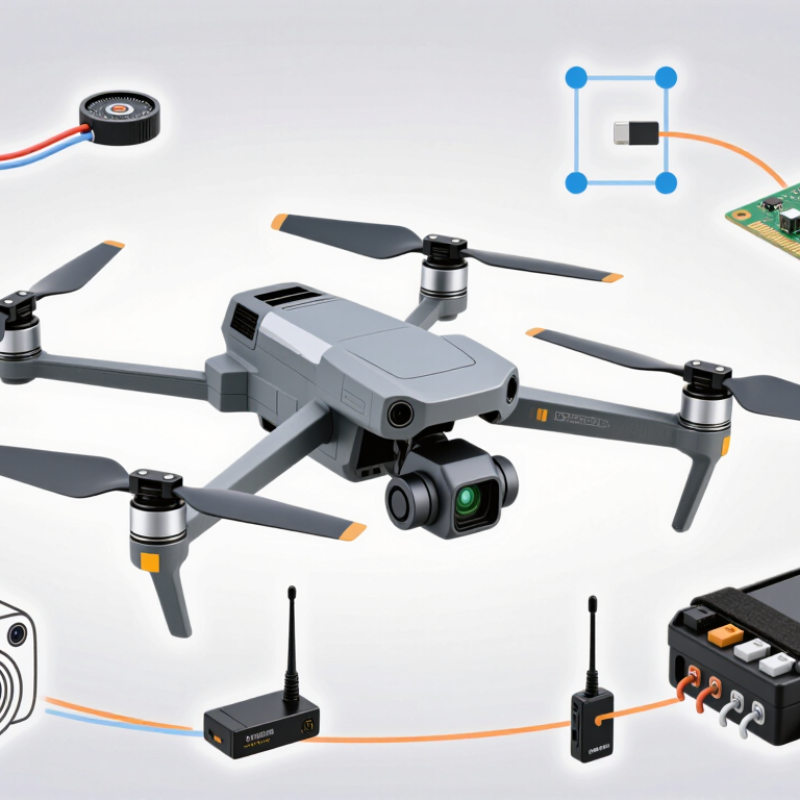
A drone may look like a single machine, but its flight depends on several parts working together. Drone Components include the frame, motors, propellers, electronic speed controllers, flight controller, battery, sensors, and radio system. Each has a distinct job. The frame holds the hardware; motors spin the propellers; and the flight controller adjusts motor speed to keep the aircraft balanced. Small parts matter.

Chris Anderson, entrepreneur and former CEO of 3D Robotics, described drones as “the new smartphones.” The comparison points to their growing flexibility, but it can hide an important detail: a drone is only as dependable as its components and their integration. A battery supplies power, while sensors such as gyroscopes and accelerometers help the controller interpret movement. A camera or other payload adds a task—and extra weight that can affect flight time and stability.

Understanding how these parts work together helps readers compare designs, diagnose basic performance issues, and make informed maintenance decisions. It also helps explain why replacing one component can affect several others. A larger propeller, for example, changes the load on a motor and may increase power demand. Component specifications do not tell the whole story, either; setup, condition, and operating environment matter. That is easy to overlook. The sections ahead examine each major component, its role, and the practical trade-offs involved.
What Are Drone Components and How Do They Work?

Core Drone Components and Their Functions

A drone is a flying system built from several connected components. The frame provides the structure and protects delicate electronics during landing. Motors create rotation, while propellers convert that rotation into upward thrust. Each motor must match its propeller position and direction. A small mismatch can make the aircraft drift or vibrate.

The electronic speed controllers regulate motor speed from signals sent by the flight controller. The flight controller acts like the drone’s central decision unit. It reads gyroscopes and accelerometers to measure movement and balance. Many systems also use barometers, compasses, or satellite positioning sensors. These sensors help maintain height, heading, and location. In practical setup work, sensor calibration matters more than many beginners expect. Poor calibration can produce unstable flight, even when every component appears new.

The battery supplies electrical energy through power distribution circuits. A stable connection prevents sudden power loss and excessive heat. A receiver interprets commands from the pilot’s control unit. Some drones include cameras, video transmitters, and storage modules for observation or mapping tasks. These additions increase weight and power demand. I often check wiring twice because one loose connector can imitate a software problem. The system is not perfectly simple. Airflow, temperature, payload weight, and worn propellers can change performance. Maintenance records, cautious testing, and manufacturer-rated electrical limits support safer, more reliable operation.

How the Frame, Motors, and Propellers Enable Flight

What Are Drone Components and How Do They Work?

How the Frame, Motors, and Propellers Enable Flight

A drone frame is its structural skeleton. It holds the motors, battery, flight controller, and electronic speed controllers in alignment. A rigid frame reduces vibration and protects delicate connections during landing. However, stiffness alone does not guarantee stable flight. Excess weight can make the aircraft slow, inefficient, and difficult to control. During practical testing, even a loose arm can create visible shaking in recorded footage.

Each motor converts electrical energy into rotational force. The flight controller adjusts motor speed many times per second. If the drone tilts forward, the rear motors usually produce more thrust, while the front motors reduce slightly. This difference creates controlled movement rather than random motion. Motors must match the frame’s size and expected payload. A powerful motor may seem helpful, but it can drain the battery faster and increase heat.

Propellers turn motor rotation into lift. Their curved blades push air downward, producing an upward reaction force. Two propellers rotate clockwise, while the other two rotate counterclockwise on a typical four-motor design. This arrangement helps cancel unwanted twisting. Propeller direction matters. One incorrect blade can prevent takeoff or cause an immediate flip. Small chips, dust, and bent edges also reduce efficiency. I once assumed a vibration came from the motor, but the damaged propeller was responsible. That mistake reinforced a basic lesson: inspect simple parts before blaming complex systems.

How the Battery and Flight Controller Manage Movement

A drone’s battery is more than a power tank. It supplies electrical energy to the motors and onboard electronics, while its voltage and remaining capacity affect how consistently they can operate. When the motors demand a sudden burst of power, voltage may dip briefly. A cold battery or a worn cell can make that dip more noticeable.

Watch the numbers. A flight controller monitors battery information, when available, and uses sensors such as gyroscopes and accelerometers to estimate the drone’s orientation and motion. If a gust tilts the aircraft, the controller compares its measured angle with the requested one. It then sends adjusted commands to the electronic speed controllers, which change motor speeds. One side may spin faster for a moment. The drone levels out.

Battery and controller work as a feedback loop, not as separate magic parts. The battery supplies power; the controller decides how to respond to sensor readings and pilot commands. A heavy battery can shift the center of gravity, so the same control input may feel different. That detail is easy to overlook. Even a well-tuned controller cannot create power that a depleted battery cannot provide, and sensor readings are never perfectly clean. A slight vibration from a propeller can complicate the controller’s view of movement.

How Sensors, GPS, and Communication Systems Guide a Drone

What Are Drone Components and How Do They Work?

How Sensors, GPS, and Communication Systems Guide a Drone

A drone stays stable by combining readings from several sensors. An inertial measurement unit tracks acceleration and rotation, while a barometer estimates altitude from air pressure. A compass helps determine direction. The flight controller compares these signals and adjusts the motors to keep the aircraft level. Small errors compound. A gust or vibration can briefly confuse a sensor, so no single reading should be treated as perfect.

GPS provides position and groundspeed estimates, helping a drone follow a route or hold its place outdoors. It can become less reliable near tall buildings, trees, or heavy interference. Communication links carry commands to the aircraft and return information such as battery level and location. If the signal weakens, a properly configured drone may slow, hover, or follow a preset response. That response depends on the aircraft and setup; a reassuring screen cannot guarantee a reliable link.

Tips: Before flight, check the sensor status, GPS reception, and control-link strength in an open area. Keep the aircraft within clear view, and avoid relying on GPS alone near obstacles. If readings disagree, pause and reassess rather than forcing the route. A tidy display can hide uncertainty, and it is worth admitting when conditions are unclear.

How Drone Components Work Together During Flight

A drone flies as a coordinated system, not as a collection of separate parts. The flight controller reads gyroscope and accelerometer data hundreds of times each second. It compares the aircraft’s position with the pilot’s commands. Then, it adjusts motor speed through electronic speed controllers. Small changes matter. A slight increase in one motor’s thrust can correct a tilt before the camera visibly moves.

The power system supplies current from the battery to the controllers and motors. Propellers convert that electrical energy into upward force, while the frame keeps the motors aligned. Navigation sensors add another layer. Satellite positioning supports location holding, but it can drift near buildings or beneath trees. The U.S. Federal Aviation Administration’s Aerospace Forecast 2024–2044 reports more than 800,000 registered drones in the country, showing why dependable component coordination matters at scale. More aircraft also means more varied operating conditions.

During flight, communication links carry commands and return telemetry, including battery voltage, altitude, and signal quality. If voltage falls, the controller may limit thrust or initiate a controlled landing. In practice, failures rarely belong to one component alone. A loose connector can resemble a software fault. A damaged propeller can overload a motor and drain the battery quickly. The European Union Aviation Safety Agency’s Annual Safety Review emphasizes rising unmanned-aircraft activity and the need for robust operational risk management. Testing should include wind, vibration, and sensor disagreement. Perfect predictions are unrealistic. Careful checks remain essential.

What Are Drone Components and How Do They Work?

Estimated power use of a small camera quadcopter during steady hover

How the components work together: The battery supplies power to the motors and electronics. The flight controller combines sensor readings with pilot commands, then signals the electronic speed controllers to adjust motor speed and keep the drone stable. Motors typically use most of the power; actual consumption varies with drone size, payload, and flight conditions.

FAQS

What are the main components of a drone?

A typical drone has a frame, motors, propellers, speed controllers, a flight controller, sensors, and a battery. Some models also carry cameras or storage modules.

What does the frame do?

The frame holds components in alignment and helps protect delicate electronics during landing. A loose arm can cause visible shaking.

How do motors help a drone move?

Motors turn electrical energy into rotation. The flight controller changes their speed to control tilt and movement.

How do propellers create lift?

Their curved blades push air downward, creating upward lift. Small chips or bent edges can reduce efficiency.

Why do propellers rotate in different directions?

On a typical four-motor design, two propellers turn clockwise and two turn counterclockwise. This helps balance unwanted twisting.

What does the flight controller do?

It reads sensor data and adjusts motor speeds to help the drone stay balanced. Calibration matters more than beginners may expect.

Why can a drone vibrate or drift?

A loose frame arm, damaged propeller, or mismatched motor setup can cause trouble. I sometimes check the obvious last. That is backwards.

How can extra equipment affect flight?

A camera or other payload adds weight and increases power demand. The drone may feel slower, and the battery may run down sooner.

Conclusion

Drone Components work together to provide the structure, power, control, and information needed for flight. The frame holds the aircraft together, while motors spin the propellers to create lift and movement. A battery supplies electrical power, and the flight controller processes pilot commands and adjusts motor speeds to help keep the drone stable and responsive.

Sensors measure factors such as orientation, acceleration, and altitude, while GPS can help determine position and support navigation. Communication systems carry instructions between the pilot’s control equipment and the drone, as well as send back useful flight information. During flight, these parts operate as a coordinated system: the controller combines commands with sensor data, then directs the motors to make adjustments. Understanding how each component contributes helps explain how a drone can take off, change direction, maintain stability, and land.

Madeline

Madeline

Madeline is a dedicated marketing professional with a wealth of expertise in our company's core offerings. With a keen understanding of the industry, she brings a unique perspective to her role, consistently delivering high-quality content that highlights the superior aspects of our products. As......