High-efficiency motors are becoming essential as manufacturers face rising energy costs, stricter efficiency standards, and pressure to reduce industrial emissions. This article examines the Top 10 High Efficiency Motor Suppliers Worldwide, focusing on measurable performance rather than promotional claims. The comparison considers IE3 and IE4 efficiency classes, permanent-magnet designs, variable-speed compatibility, service networks, customization, and lifecycle value.
Energy-efficiency expert Dr. Paul Waide has stated, “Electric motor systems are the single largest end use of electricity.” His observation explains why motor selection deserves careful attention. A motor running for thousands of hours can quietly consume more money than its purchase price. Small efficiency differences matter.
The suppliers discussed here serve factories, water plants, HVAC systems, logistics facilities, and process industries. Their strengths are not identical. One may offer excellent efficiency at constant speed, while another performs better with an inverter-driven pump. A strong warranty also means little without accessible technicians and replacement parts. That detail is easy to overlook.
This ranking uses publicly available technical data, industry experience, product documentation, and practical purchasing considerations. It does not treat brand size as automatic proof of superiority. Independent testing remains valuable. Some published figures may depend on operating conditions, measurement methods, or regional standards. That creates room for doubt.
Readers should therefore compare rated efficiency, load profile, voltage, duty cycle, installation quality, and maintenance requirements before choosing a supplier. The “best” motor is rarely universal. It is the motor that performs efficiently in the real application.
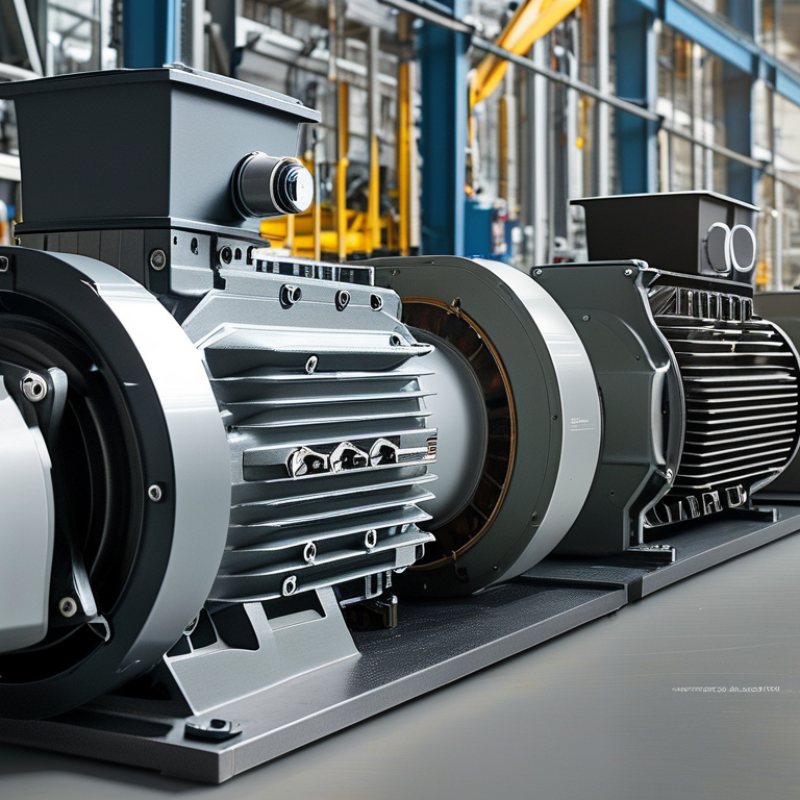
A high-efficiency motor supplier offers more than an IE3 or IE4 label. It provides traceable test results, clear technical files, and application guidance. IEC 60034-30-1 defines global motor efficiency classes, but certification alone cannot guarantee savings in every installation. Poor sizing, frequent starts, or oversized equipment can reduce real performance. The International Energy Agency reports that electric motor systems consume roughly half of global electricity. The U.S. Department of Energy also estimates that motor systems use about 70% of industrial electricity in the United States. These figures make supplier competence a practical concern, not a marketing detail.
Tips: Ask for test conditions, efficiency curves, bearing data, and service-life assumptions. Check whether the supplier supports variable-speed drives and power-quality issues. Request references from similar loads, such as pumps, fans, or compressors. A useful supplier should explain total cost of ownership, not only purchase price. I would also inspect spare-part availability and local response times. A perfect efficiency promise is rarely realistic. Site conditions change everything. Independent laboratory evidence, warranty clarity, and documented field experience are stronger signals of reliability. Suppliers that measure installed performance deserve closer attention, even when their catalog numbers appear less impressive.
Evaluating the top 10 high efficiency motor suppliers requires more than comparing catalogue efficiency. Motor systems consume roughly 45% of global electricity, according to the IEA 4E Motor Systems Annex. Therefore, the assessment should examine energy performance, operating conditions, and lifetime costs. A motor achieving peak efficiency in a laboratory may perform differently under partial loads, frequent starts, or variable-speed control.
The scoring model should give strong weight to verified efficiency classes under IEC 60034-30-1. Independent test results should come from ISO/IEC 17025-accredited laboratories. The U.S. Department of Energy’s motor system guidance also stresses system-level savings, including correct sizing, controls, maintenance, and power quality.
I would assess rated-load efficiency, partial-load behavior, service coverage, repair access, warranty terms, and documented failure rates. Availability of recycled materials and product-level carbon data should also influence the score.
The ranking is not perfectly neutral. Reported efficiency can depend on test temperature, voltage, and measurement tolerance. That matters. Suppliers should disclose these conditions clearly, rather than presenting one attractive percentage. A practical review could assign 40% to measured efficiency, 20% to lifecycle reliability, 15% to system compatibility, 15% to service capability, and 10% to environmental transparency. The weights may need revision for pumps, compressors, or conveyors. One universal score is convenient, but not always fair.
High-efficiency motor suppliers are being judged by more than name recognition. The International Energy Agency estimates that electric motor systems consume roughly half of global electricity. This makes efficiency, serviceability, and verified performance commercially important. The following profiles represent ten leading supplier types shaping the worldwide market.
The first profile is the industrial automation specialist, pairing motors with drives and sensors. The second focuses on premium-efficiency induction motors for factories. The third develops permanent-magnet motors for compact equipment. The fourth serves pumps, fans, and compressors. The fifth supplies motors for elevators and material-handling systems.
The sixth targets electric vehicles and traction platforms. The seventh builds explosion-resistant equipment for regulated industrial sites. The eighth offers customized motors for robotics and precision machinery. The ninth supports agricultural and water-infrastructure applications. The tenth provides remanufacturing, testing, and lifecycle services.
Performance claims need careful checking. IEC 60034-30-1 defines international efficiency classes, while the U.S. Department of Energy reports that motor-driven equipment uses more than half of industrial electricity. A reliable supplier should publish test conditions, efficiency curves, thermal limits, and repair guidance. Field experience also matters. A motor that performs well in a laboratory may struggle with dust, voltage imbalance, or frequent starts.
Not every “high-efficiency” claim is equally useful. Some suppliers report peak efficiency, not full-load efficiency. That distinction can mislead purchasing teams. Buyers should compare verified data, warranty terms, spare-part access, and total operating cost. Imperfect data remains common. Independent testing is still worth the expense.
The top 10 high-efficiency motor suppliers compete across technologies, regions, and application needs. Their portfolios commonly include IE3 and IE4 induction motors, permanent-magnet designs, synchronous-reluctance units, servo motors, and traction systems. IEC 60034-30-1 defines these efficiency classes, but certification does not guarantee the best operating cost. Voltage, load profile, maintenance quality, and inverter compatibility matter just as much.
Market demand is strongest in industrial automation, pumps, compressors, HVAC, transport, and renewable-energy equipment. The International Energy Agency reports that electric motor systems consume about 46% of global electricity. Even small efficiency gains can therefore produce measurable savings on a factory floor. The U.S. Department of Energy also identifies motor systems as a major industrial energy-saving opportunity, especially when motors, drives, and controls are assessed together. That point is often missed.
Supplier comparisons should examine more than rated efficiency. Product breadth, regional service centers, spare-part access, testing capacity, and software support reveal practical strength. High-speed permanent-magnet motors suit compact equipment, while rugged induction motors remain valuable in harsh plants. Servo systems offer precise motion, but they usually require higher engineering effort. Some published market forecasts show rapid growth for advanced motor technologies, yet forecast accuracy remains imperfect. Real purchasing decisions still depend on duty cycles, local electricity prices, and technician experience.
| Rank | Anonymized Supplier | Primary Motor Technologies | Typical Efficiency Classes | Approximate Product Power Range | Main Market Coverage | Common Applications | Product Strengths | Customisation Capability |
|---|---|---|---|---|---|---|---|---|
| 1 | Supplier 01 | IE4/IE5 induction motors, permanent-magnet motors, synchronous reluctance motors | IE3, IE4, IE5 | 0.12–1,000 kW | Industrial automation, process industries, HVAC, water, energy | Pumps, fans, compressors, conveyors, extruders, machine tools | Broad low-loss portfolio, inverter-duty designs, high overload capability | High |
| 2 | Supplier 02 | High-efficiency induction motors, permanent-magnet synchronous motors, servo motors | IE3, IE4, IE5 | 0.09–800 kW | Manufacturing, robotics, logistics, commercial buildings | Robots, packaging lines, conveyors, lifts, air-handling systems | Strong motion-control integration and compact motor packages | High |
| 3 | Supplier 03 | IE3/IE4 squirrel-cage motors, medium-voltage motors, synchronous motors | IE3, IE4 | 0.75–15,000 kW | Oil and gas, mining, metals, utilities, heavy process plants | Large pumps, fans, mills, compressors, crushers, hoists | Large-frame engineering, high-voltage capability, rugged construction | Very high |
| 4 | Supplier 04 | Premium-efficiency induction motors, permanent-magnet motors, servo systems | IE3, IE4, IE5 | 0.03–630 kW | Factory automation, food processing, material handling, HVAC | Conveyors, mixers, pumps, compressors, automated production equipment | Wide frame-size coverage and efficient variable-speed operation | High |
| 5 | Supplier 05 | IE3/IE4 three-phase motors, brake motors, explosion-protected motors | IE3, IE4 | 0.12–500 kW | General industry, warehousing, chemical processing, agriculture | Gearmotors, cranes, pumps, fans, conveyors, agricultural machinery | Strong standardised catalogue and hazardous-area options | Medium-high |
| 6 | Supplier 06 | Permanent-magnet motors, axial-flux motors, integrated motor-drive systems | IE4, IE5, application-specific equivalent ratings | 0.25–400 kW | Electric mobility, HVAC, pumps, renewable-energy equipment | Traction systems, rooftop units, industrial pumps, compact machinery | High power density, low operating losses, compact drive integration | High |
| 7 | Supplier 07 | IE3/IE4 induction motors, synchronous reluctance motors, custom industrial motors | IE3, IE4, IE5-ready systems | 0.12–2,500 kW | Water infrastructure, cement, pulp and paper, machinery manufacturing | Pumps, mixers, fans, rolling equipment, crushers, process machinery | Flexible mechanical design and strong retrofit potential | Very high |
| 8 | Supplier 08 | High-efficiency induction motors, single-phase motors, brake motors | IE2, IE3, IE4 | 0.06–315 kW | Commercial equipment, light industry, agriculture, building services | Small pumps, fans, compressors, machine tools, handling equipment | Competitive standard motors and broad low-to-medium power availability | Medium |
| 9 | Supplier 09 | Permanent-magnet servo motors, brushless DC motors, high-speed motors | IE4, IE5, application-specific equivalent ratings | 0.01–250 kW | Robotics, medical equipment, electronics, packaging, mobility | Robotic joints, pumps, actuators, precision machinery, autonomous systems | Excellent controllability, high torque density, precision positioning | Very high |
| 10 | Supplier 10 | IE3/IE4 induction motors, medium-voltage motors, custom synchronous motors | IE3, IE4 | 0.75–10,000 kW | Power generation, mining, marine, water treatment, heavy industry | Large pumps, fans, compressors, propulsion auxiliaries, generators | Heavy-duty construction, medium-voltage expertise, project engineering | Very high |
Choosing among the top 10 high-efficiency motor suppliers worldwide requires more than comparing catalog prices. The right supplier must understand your application, not just sell a motor. Share details such as load profile, starting frequency, ambient temperature, installation height, voltage, and available space. A motor running beside a hot furnace faces different demands from one driving a clean-water pump. Ask for verified efficiency data, testing methods, warranty terms, and documented compliance with recognized international standards.
Experience also matters. Request performance curves, sample test reports, and references from similar industries. A reliable supplier should explain whether an IE3 or IE4 motor fits your duty cycle and energy goals. Check service capacity too. Spare parts, remote troubleshooting, and response time can matter more than a small purchase discount. I have seen projects choose impressive efficiency figures, then overlook braking requirements and shaft alignment. That mistake becomes expensive during commissioning. Supplier claims should be questioned politely, especially when operating conditions differ from laboratory tests.
Tips: Prepare a one-page application sheet before requesting quotations. Include motor power, speed, duty cycle, environment, control method, and installation limits. Ask each supplier to state assumptions clearly. Compare lifetime energy cost, not only the invoice. If the application is unusual, request a pilot test or engineering review. A cheaper motor may be wrong. Reliability deserves evidence.
IEC efficiency-class benchmark for screening motor suppliers. Higher efficiency generally means lower operating losses at the same rated output.
Reference point: minimum nominal efficiency for a 15 kW, four-pole, 50/60 Hz three-phase motor under IEC 60034-30-1 efficiency classes. When comparing suppliers, also verify rated speed, duty cycle, thermal design, inverter compatibility, warranty, testing documentation, and total cost of ownership.
It should provide traceable test results, efficiency curves, technical files, and application guidance. Labels alone prove little.
Site conditions can differ greatly. Dust, heat, voltage imbalance, and frequent starts may reduce real performance.
Share motor power, speed, duty cycle, starting frequency, voltage, temperature, installation height, and available space.
Request test conditions, full-load efficiency, thermal limits, bearing data, and service-life assumptions. Peak efficiency can mislead.
Not always. Energy use, maintenance, spare parts, downtime, and installation errors can outweigh a small purchase discount.
Look for spare-part availability, remote troubleshooting, local response times, warranty clarity, and repair guidance.
It should explain drive compatibility, cooling limits, braking needs, and performance across the operating range.
It helps with unusual loads, tight spaces, hot environments, or uncertain duty cycles. Assumptions should be written clearly.
Ask for projects involving similar pumps, fans, compressors, conveyors, or agricultural equipment. Similar loads matter.
Be cautious about perfect savings promises, unclear test methods, weak warranty terms, and impressive figures without field evidence. Mistakes happen.
This article presents a practical overview of the world’s leading High Efficiency Motor suppliers without focusing on specific brand names. It explains what distinguishes a reliable supplier, including motor efficiency, manufacturing consistency, product durability, technical expertise, energy-saving performance, certification, customization capabilities, and after-sales support. It also describes how global suppliers can be evaluated through product quality, innovation, production capacity, geographic coverage, market experience, and responsiveness to customer requirements.
The article then compares major motor technologies, application markets, efficiency levels, control options, and product ranges, helping readers understand the differences between solutions for industrial equipment, commercial facilities, transportation systems, and energy-related applications. Finally, it offers guidance on selecting the right supplier by considering operating conditions, power requirements, load characteristics, installation environment, maintenance needs, total ownership cost, delivery capacity, and long-term service. The goal is to help buyers make an informed and application-focused decision.

Yaftech Motor