Electric vehicles, robotics, and efficient appliances all depend on precise control of electric motors. That makes the Motor Driver more than a small power stage: it shapes torque, speed, heat, noise, and energy use. The International Energy Agency’s Global EV Outlook 2024 reports that electric-car sales reached nearly 14 million in 2023, or 18% of all car sales. That growth expands demand for reliable motor-control electronics, though EVs are only one part of the picture.
There is no single “top” driver for every design. Brushed DC drivers remain practical for simple, low-cost motion. Stepper drivers suit controlled positioning, while brushless DC and three-phase inverter solutions support efficient, higher-performance systems. Integrated smart drivers can reduce board space, but they may complicate thermal management. A warm driver IC beside a tightly packed motor is a familiar design warning.
As a concise design principle—not a verified verbatim quotation—motor-control specialist Dave Wilson of Texas Instruments emphasizes matching the control method to the application’s real demands. That distinction matters: voltage, current, switching losses, sensing, and protection features can outweigh headline power ratings. This overview compares the leading Motor Driver types for 2026, while recognizing that product availability and specifications vary by manufacturer. Check datasheets and test conditions before choosing.
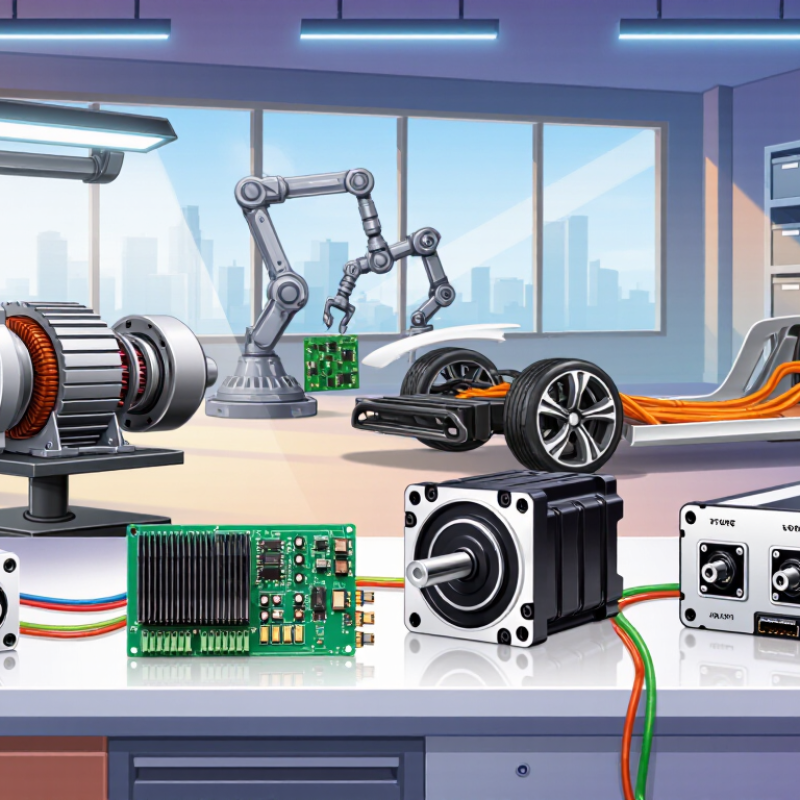
A motor driver is the power interface between a controller and a motor. It converts low-power commands into controlled current, voltage, and direction. In practice, it also manages heat, braking, speed, and fault protection. The choice affects noise, torque accuracy, energy use, and service life.
Brushed DC drivers remain practical for pumps, actuators, and compact mechanisms. They are simple, affordable, and easy to control. Their brushes wear, however. Brushless DC and permanent-magnet synchronous motor drivers support quieter operation and higher efficiency. They fit fans, robotic joints, electric vehicles, and industrial machinery. The International Energy Agency reported over 14 million electric car sales in 2023. That growth increases demand for efficient inverter-based drives. It also exposes weaknesses in thermal design.
Stepper drivers still serve printers, valves, and positioning equipment. They provide predictable movement without complex feedback, but can lose torque at higher speeds. Servo drives add encoders and closed-loop control for demanding robotics and machine tools. The International Federation of Robotics recorded 541,302 industrial robot installations in 2023. This figure shows why accurate motion control matters. Yet, not every application needs servo precision. Overengineering raises cost and setup time.
Integrated drivers will likely gain attention in 2026. They combine power stages, sensing, diagnostics, and communication in smaller assemblies. Market forecasts differ widely, so exact growth claims deserve caution. Real designs still compromise between efficiency, price, noise, and repairability. A cooler motor is not automatically a better system. The load profile decides more than the driver label.
In 2026, motor drivers mainly fall into five practical types: brushed DC H-bridges, three-phase brushless inverters, stepper chopper drivers, servo drives, and integrated smart drivers. Brushed DC drivers remain simple and affordable for pumps, valves, and small actuators. Their carbon brushes wear, however. That weakness is easy to overlook.
Three-phase brushless drivers electronically switch current through the motor phases. They support quieter operation, higher efficiency, and better thermal control. The International Energy Agency reported that global electric car sales exceeded 17 million in 2024, increasing demand for compact, efficient power electronics. This trend also affects fans, compressors, and battery-powered machinery. Sensorless control reduces hardware, but it can struggle during startup or heavy loads.
Stepper drivers regulate current through two or more motor windings, making them useful for printers, stages, and dosing equipment. Servo drives add feedback, allowing precise position, speed, and torque control. The International Federation of Robotics reported 541,302 industrial robots installed worldwide in 2023, highlighting the need for dependable motion control. Integrated smart drivers now combine power stages, diagnostics, and communication in smaller packages. They simplify wiring, but heat still needs a real path away from the board. A specification sheet cannot replace testing under actual load, vibration, and repeated acceleration.
Motor drivers are becoming more specialized as automation, robotics, and electric mobility expand. A 2024 MarketsandMarkets report projects the global motor driver IC market to grow from about USD 2.9 billion in 2023 to USD 4.5 billion by 2028. That growth reflects a practical need: different motors demand different control methods.
Brushed motor drivers remain simple and cost-effective. They suit pumps, fans, toys, and compact actuators requiring basic speed control. However, brushes wear against the commutator. Dust, noise, and maintenance can become visible problems.
Brushless motor drivers use electronic commutation instead. They offer longer service life, quieter operation, and better efficiency. A 2024 Grand View Research report identifies rising demand for brushless motors in industrial equipment and electric vehicles. Yet, their control circuits are more complex.
Stepper drivers move a shaft through controlled increments. They are useful in 3D printers, laboratory stages, and small CNC machines. Their position can be predictable without feedback, but missed steps remain a risk under heavy loads.
Servo drivers close the loop with encoders and continuously correct position, speed, and torque. They suit robotic joints and high-speed production systems. The International Federation of Robotics reported 541,302 industrial robot installations worldwide in 2023, showing why precise motion control matters.
Still, servo systems cost more and require careful tuning. In practice, engineers sometimes choose steppers too quickly. That decision deserves review when acceleration, heat, or load changes are severe.
Choosing a motor driver in 2026 starts with the motor, not the product catalog. Brushed DC motors usually need an H-bridge driver with current limiting. Brushless motors require a three-phase inverter and suitable commutation control. Stepper motors benefit from chopper regulation, microstepping, and stable torque at low speed. Integrated smart drivers add diagnostics and communication, but they can reduce design flexibility. Simpler is sometimes better.
Check the motor’s real operating current, not only its rated value. Startup, braking, and sudden load changes can create short current peaks. Select a driver with sensible voltage and thermal margins. Measure twice. Noise matters. In a compact enclosure, even an efficient driver may need copper area, airflow, or a heat sink. I have seen prototypes fail because engineers trusted average current figures. That assumption can fail. Review control requirements carefully. A basic speed application may need only PWM, while positioning systems often need encoder feedback and fault detection. Consider electromagnetic compatibility, connector ratings, protection features, response time, and software support. Field testing under the heaviest load is essential. Bench tests alone can hide vibration, heat buildup, and unstable startup behavior. Cost also deserves reflection: the cheapest driver may create expensive debugging later, yet excessive features can add unused complexity.
Typical continuous output-current capability by motor driver type
Brushed DC and stepper drivers are commonly selected for compact, cost-sensitive systems. BLDC/PMSM inverters provide efficient electronic commutation, while servo drives support precise closed-loop motion. AC induction VFDs are widely used for higher-power industrial speed control. The ranges shown are representative engineering ranges; the final selection should also consider supply voltage, peak current, control interface, thermal design, feedback requirements, efficiency, and safety functions.
Emerging motor driver technologies are making motion systems smaller, quieter, and easier to monitor. Integrated drivers now combine power stages, current sensing, protection, and communication in one compact package. This reduces wiring around robotic joints and automated conveyors. It also simplifies maintenance.
Wide-bandgap power devices are gaining attention in high-speed applications. Gallium nitride supports fast switching and compact designs, while silicon carbide suits higher voltage and demanding thermal conditions. These devices can reduce heat, but layout quality remains critical. A poor circuit can waste their advantages.
Sensorless field-oriented control is improving through stronger algorithms and embedded processors. It can estimate rotor position without a physical sensor, helping pumps, fans, and small electric vehicles reduce component count. Still, low-speed performance may become unstable under sudden loads. Engineers should test cold starts, blocked rotors, and repeated acceleration instead of trusting laboratory results.
Artificial intelligence is also entering motor diagnostics. Drivers can identify unusual current patterns, vibration changes, and gradual bearing wear. In factories, this supports predictive maintenance before a motor stops production. The data is useful, but not automatically reliable. Incorrect sensor calibration can create confident, misleading warnings.
For medical equipment, delivery systems, and collaborative robots, safety-focused drivers are becoming more important. They need controlled torque, fast fault response, and clear communication with the main controller. Cost pressure remains real. The newest technology is not always the best choice. Sometimes, a simpler driver offers better reliability, repairability, and long-term value.
It works well for pumps, fans, toys, and compact actuators needing simple speed control. Brushes wear out.
They use electronic commutation instead of physical brushes. This usually means quieter operation, longer service life, and better efficiency. However, their control circuits are more complex.
Stepper drivers suit 3D printers, laboratory stages, and small CNC equipment. They move the shaft through controlled increments without requiring feedback. Missed steps remain possible.
Servo drivers use encoders to correct position, speed, and torque continuously. They suit robotic joints and fast production systems. They cost more and require careful tuning.
Heavy loads, sudden acceleration, and excessive heat can cause missed steps. A design may look fine in testing, then fail during repeated movement. Review the load.
Many combine power stages, current sensing, protection, and communication in one compact package. This can reduce wiring near robotic joints and automated conveyors. Maintenance may become easier.
Sensorless control estimates rotor position without a physical sensor. It can reduce component count in pumps, fans, and small electric vehicles. Low-speed operation may become unstable under sudden loads.
Drivers can monitor current patterns, vibration changes, and gradual bearing wear. They may warn technicians before a motor stops production. But faulty calibration can produce convincing, misleading alerts.
Not always. A simpler driver may provide better reliability, repairability, and long-term value. The newest solution can add cost without solving the actual problem.
A Motor Driver is the essential link between a control system and a motor, converting low-power commands into the voltage and current needed to produce controlled movement. In 2026, the main types include brushed DC, brushless DC, stepper, and servo drivers. Each serves different motion requirements: brushed drivers offer simple and economical control, brushless drivers provide efficient and low-maintenance operation, stepper drivers deliver precise incremental positioning, and servo drivers support high-speed, feedback-based performance. Understanding these differences helps engineers match a driver to the motor, load, speed, torque, accuracy, and operating environment.
Selecting the right Motor Driver also requires attention to power capacity, thermal management, control interfaces, protection features, and system complexity. Emerging technologies are making drivers more compact, energy-efficient, intelligent, and adaptable, supporting applications in automation, robotics, electric mobility, medical equipment, and smart manufacturing. As motion systems become more connected, advanced feedback, predictive monitoring, and real-time control will continue to shape Motor Driver development in 2026.

Yaftech Motor